

An Integrative Approach to Inner Work
Inner-Directed Therapy brings together a number of core therapeutic domains into a single, coherent approach.
The approach has emerged in the psychedelic space. A psychedelic experience is held within an extended therapeutic container. The therapeutic approach is based on a deep trust that each client has their own inner wisdom, the psychedelic experience can help them to connect with it, and the therapist’s role is to create safety and trust, and to help the client to connect with that inner wisdom and process the material that emerges.
This approach can be applied in the same way to other practices that evoke non-ordinary states, including breathwork, meditation, and somatic practices.
Learning to work with an inner-directed approach requires both breadth and depth of skill. Rather than learning separate models in isolation, practitioners develop the capacity to support this inward process, and to work from a variety of perspectives in an integrated way—allowing the direction of the work to emerge as the client’s process unfolds, while maintaining safety and attunement.
Therapeutic Philosophy
Concepts such as inner-directed therapy and inner-healing intelligence are gaining renewed attention, though these ideas are not new. In western psychology their roots can be traced back to the early twentieth century.
The foundation of our programs can be found in humanistic psychotherapy, which emerged in response to the limitations many clinicians saw in psychoanalysis and behaviourism. Rather than viewing people as primarily driven by unconscious conflict or conditioned behaviour, humanistic psychotherapy understood people as inherently oriented toward growth, connection, healing and meaning.
From Abraham Maslow’s work on self-actualisation to Carl Rogers’s development of the core conditions for therapeutic change, humanistic psychology moved away from the idea of the therapist as the expert and instead placed the client at the centre of their healing process.
Humanistic psychotherapy has since served as a foundation for the emergence of many contemporary modalities and approaches. Each carries its own distinct orientation and emphasis - from somatic therapies such as Hakomi and Somatic Experiencing, to process-experiential approaches like Gestalt and Focusing, as well as relational, existential, and transpersonal therapies.
An inner-directed approach draws from across this tradition. Rather than privileging any single method or model, it integrates principles and practices that share a common orientation: that people carry within them an inherent capacity for healing, and that the therapist's primary role is to support the conditions in which that capacity can emerge.
Our programs support participants to develop - or re-develop - a way of working that values presence, relationship, and embodiment, and that has the flexibility to meet each client fully, wherever their process takes them. They are well-suited to therapists who are looking to deepen and broaden their existing practice, those who feel something is missing from more structured or technique-driven ways of working, and those supporting or preparing to support clients working with non-ordinary states in their healing — whether through psychedelic-assisted therapy or any other technique.
Training Philosophy
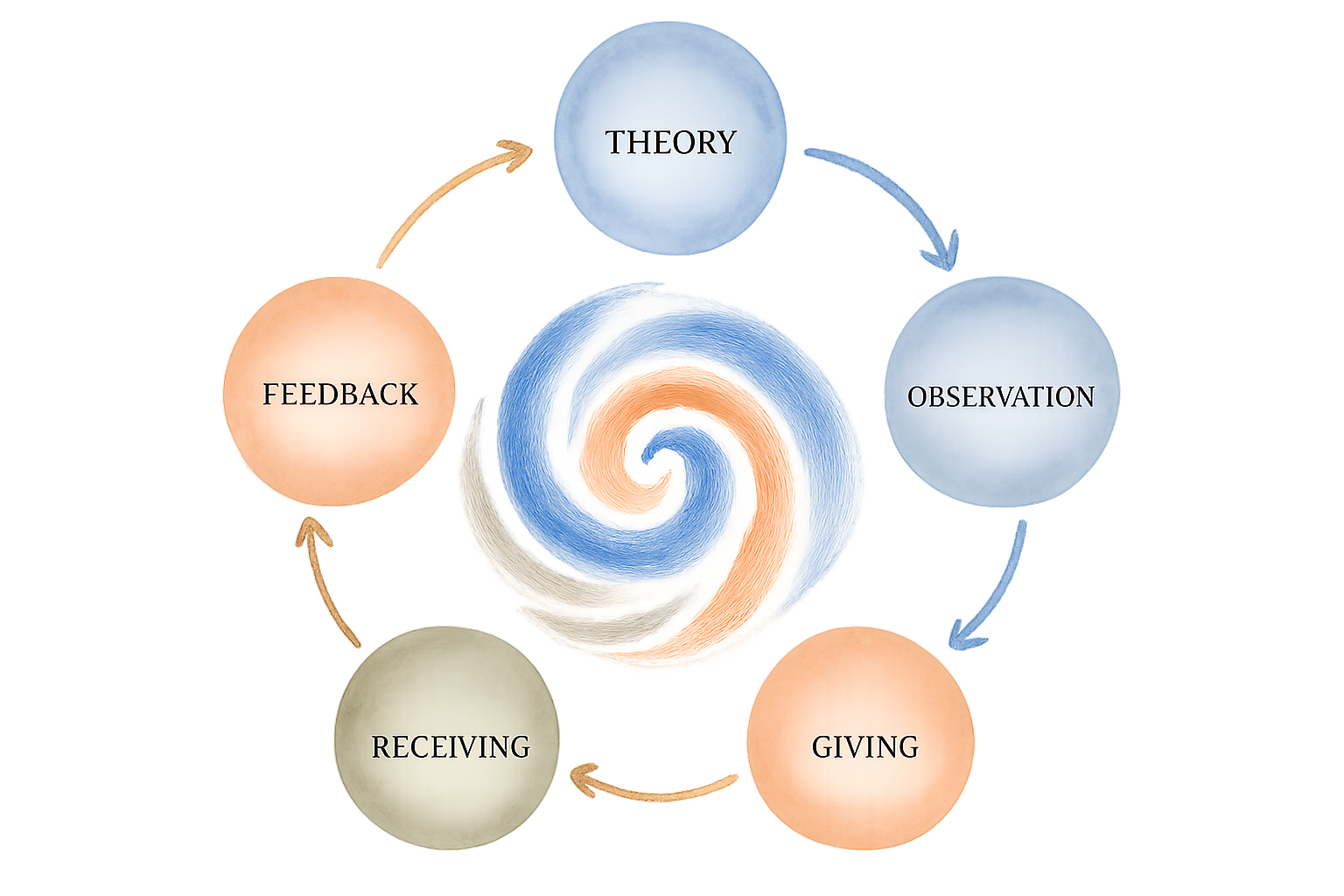
Our programs are grounded in practice. Many therapists finish their formal training without ongoing opportunities to actively practice their skills, receive feedback, or work under observation. These programs are designed to fill that gap. Participants give and receive IDT while being observed by a third therapist who provides structured feedback. This practical focus is a core part of what makes the training unique.
While students are introduced to the principles and skills of an inner-directed approach, the emphasis is on experiential learning rather than theory. As a result, participants must be willing to engage in both a personal and professional process. This includes the capacity for self-reflection, openness to feedback, and a willingness to have blind spots challenged in service of growth — both within themselves and within the group.
To protect the integrity of the learning environment, all participants undergo a thorough screening process. The programs are intentionally delivered over time rather than condensed into a multi-day workshop, recognising that this approach often requires not only learning new skills, but unlearning established ways of working. Integration takes time.